If you're ready to have your big brain explode, our friend Hank Green does a great job of laying out the basics of the history of psych too... be ready for some rapid-fire knowledge with this one.
You can watch it directly on Youtube too.
Some timelines of the history of psychology:
http://www.learner.org/series/discoveringpsychology/history/history_nonflash.html
http://allpsych.com/timeline/#.VgioYGRViko
http://psychology.about.com/od/historyofpsychology/a/psychistory.htm
And... a sample from a comic called Action Philosophers
http://www.actionphilosophers.com/eviltwin_actionphilosophers_preview.pdf
Sunday, September 27, 2015

Tuesday, September 8, 2015
Unit 1 - Chapter 7: Memory - How we remember, why we forget.
Unit 1 Chapter 7 Memory
Key ideas from Memory
Unit:
Encoding, episodic
vs. semantic and procedural memory, explicit vs. implicit memory, maintenance
and rehearsal strategies to improve memory, various models of how memory works
such as PDP and Info Processing, understand the difference between sensory,
short term, and long term memory, compare recency and primacy effects,
understand what affects memory retrieval, understand the limits of eye-witness
testimony, Herman Ebbinghauss , compare retroactive and proactive
interference, compare retrograde and
anterograde amnesia,
*****Use mnemonics
and distributed practice to learn all this stuff and know why you are
remembering and forgetting.
Good overview of basic memory concepts.
A whole site dedicated to human memory... very helpful. It has this very complete concept map.
http://www.human-memory.net/types.html

Crash Course Psychology with our friend Hank!
How we make memories...
How we make memories...
Remembering and Forgetting
Some fun memory games you can do online
Elizabeth Loftus's Ted Talk - The Fiction of Memory... the rape conviction of an innocent man...
NOVA: How Memory Works
Article - What Science Says about Ferguson: Hacked memory. We may all be working from different sets of "facts" about the same event.
http://www.forbes.com/sites/fayeflam/2014/12/01/what-science-says-about-the-ferguson-case-memory-can-be-hacked/
This is not specifically about memory, but about implicit associations we make about people.
https://implicit.harvard.edu/implicit/demo/ You can take some of the Implicit Association Tests to see what some of your implicit associations about people and groups are. I’m putting it with this unit as an example of implicit vs. explicit thought processes.
Story from National Public Radio (NPR) about H.M., the man who had the bilateral removal of his hippocampus (What is the plural of hippocampus?) and ended up with the nearly complete inability to form new memories. Find out why he had his hippocampus removed and learn about this amazing case study of anterograde amnesia.
http://www.npr.org/templates/story/story.php?storyId=7584970
And an article from Psychology Today about H.M.
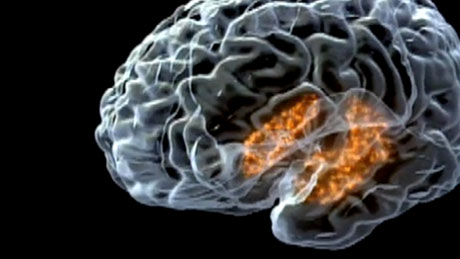
This video clip was made based on 2000 slices that were made of H.M.'s brain after he died in 2008.
And an article from Psychology Today about H.M.
This video clip was made based on 2000 slices that were made of H.M.'s brain after he died in 2008.

The movie Memento was the first feature film by star director Christopher Nolan who went on to direct The Dark Night and Inception. It is a fictional film about a character who, like H.M., loses the ability to create any new memories, but still tries to solve a horrible crime.

It is rated R due to some very violent content and adult language. If that sort of film is acceptable to you and your parents, you can stream it on Netflix or rent it. It's definitely not appropriate for younger siblings.
Friday, September 4, 2015
Summer Assignment Parts 3 and 4 - Due on Tuesday 9/8
Part 3 Due the FIRST day of class Complete all the study-guide questions for
“Phineas Gage” by John
Fleischman in your AP Psych Notebook.
Part 4. Due the First day of class: Read AND take Cornell Notes and make
Flash-Cards for chapter 7,
MEMORY, in the Bernstein psychology textbook. You will keep these notes and
flashcards all year and use them as you study for the AP Exam, so have a good
notebook or binder that will last all year. The main thing to do when you take
notes is ORGANIZE the information in such a way that it makes sense to
you. Write questions and your own thoughts about the material as
well as headings and subheadings in the left column of your notes. The more you
can connect this material to information you already know or experiences you’ve
had, the better you will learn and understand the material.
We’re reading Ch7
first because many students have said that it helped them learn to memorize new
terms and concepts. This knowledge will help you all year and beyond. Review
the Key Ideas listed below to be sure they’re in your notes, flashcards and
brain.
Key ideas from Memory
Unit / Chapter 7:
Encoding, episodic
vs. semantic and procedural memory, explicit vs. implicit memory, maintenance
and rehearsal strategies to improve memory, various models of how memory works
such as PDP and Info Processing, understand the difference between sensory,
short term, and long term memory, compare recency and primacy effects,
understand what affects memory retrieval, understand the limits of eye-witness
testimony, Herman Ebbinghauss , compare retroactive and proactive
interference, compare retrograde and
anterograde amnesia,
*****Use mnemonics
and distributed practice to learn all this stuff and know why you are
remembering and forgetting.
It’s also a great
idea to skim through the textbook to familiarize yourself with the topics we’ll
be learning all year. Jot down questions you have on sticky-notes and put them
in your book so you remember to ask them when we get to the unit.
On the first day of
class be prepared to discuss the Phineas Gage book as well as Chapter 7 of the
Bernstein text.
Tuesday, August 4, 2015
Summer Assignment Part 2: Review of Phineas Gage Book Due Aug 24th.
After you have read Phineas Gage and worked on the Phineas Gage Reading Guide Questions you should post your review of the book in the COMMENTS to THIS blog post. Please read all the instructions below before writing your Book Review. (use the "comment" link below this post)

Your comment should be a review of the book. A book review is a critical assessment of the book in which you share your opinions (claims) about the book and back up those opinions with examples from the book (evidence). Be sure to describe the story AND the style of the book.
Some questions you might want to think about as you write: What did you think of the book? What did you find most interesting? What are some new or surprising things you learned from the book? Why do you think Phineas was "lucky" or "unlucky?" Are there other texts (books, movies, etc.) that relate to the story of Phineas? Why or why would you not recommend it to a friend?
As with the last blog assignment, I will not show the comments until the deadline so everyone has a chance to work on the assignment without being too influenced by other peoples' work. Do not re-send your post multiple times.
Please note: As always you can e-mail me with questions. If you're having trouble with the blog, just e-mail me your comment so you have evidence you completed it before the deadline.
Here are a couple of links about writing a good book review:
Here is a review of the book, The Hunger Games you can use as an example of a book review. Of course it's about a fictional novel, not a non-fiction book like Phineas Gage.
And just for fun....
Wednesday, June 17, 2015
BLOG POST 1- PART 1 OF THE SUMMER ASSIGNMENT - DUE JULY 20
Welcome to AP Psychology at North-Grand!
Be sure to sign up for our Remind 101 text alerts using the code on your syllabus.
Ten Most Revealing Psychology Experiments!

Read all these instructions carefully before beginning!
Go to this link about the Ten Most Revealing Psychology Experiments and read through the summaries of all ten of them.
Select one of the experiments that you think is interesting. Click on the link in the summary to start your research about that experiment. Read through the information and seek out other information online. There may be good YouTube videos or other sources you should investigate. You can also look up some of the experiments or the experimenters in your textbook.
In your comment to THIS BLOG POST please do the following to complete the assignment:
1. Summarize the experiment. Include who did it, when they did it,where they did it, and what they did.
2. Explain the importance of the experiment to our understanding of human behavior. Make a claim about why you think the experiment is considered to have provided a valuable insight into the way people think and/or act?
3. Give one example of how the experiment can be applied to everyday life. You can use yourself or someone you know in the example, or make up an example that you think the experiment might apply to in normal life.
4. At the end of your post include all sources (full URLs, please) and sign the post with your first name and just the initial letter of your last name (for example: Phillip D.)
5. To send your comment please click the "Name/URL" option and put your first name and last initial in the "Name" box. Don't fill in the URL box.
I strongly suggest that you write your comment in Word or other program first so you can check your spelling etc. and then just paste it into the comments at the end of this post.This will also allow you to save your work in case the blog does something strange.
Your post should be 3 to 5 paragraphs long and should demonstrate some original thinking on your part. Do not cut-and-paste or copy any text directly.
Your comment will not show up on the blog until close to the due-date, as I want everyone to approach the project without being biased by seeing the posted work of others in the class. If you aren't sure if your comment went through you may e-mail me and I'll let you know. Please don't keep re-sending it over and over. If your comment is too long, it may not let you post it and show an error message. If this happens, try breaking your comment up into 2 or 3 parts and label them appropriately.
If you have any questions please e-mail me. I usually reply to e-mails within a day or two. Before sending me an e-mail, please read my "How to email a teacher" post from my biology blog ... really. http://cantorsbiologyblog.blogspot.com/2009/09/how-to-send-e-mail-to-teacher-really.html
If you're having trouble figuring out how to comment, you can watch this handy video.
If you're having trouble figuring out how to comment, you can watch this handy video.
Keep working on the rest of your summer assignment from the Bernstein Textbook and the Phineas Gage book.
Thursday, May 28, 2015

Sunday, May 10, 2015
Consumer Ed Unit.... Due 5/18
Your job is to become an expert on one of the following topics and then teach the important ideas about it to the class. Your final grades in the class and your consumer education credit depend on your project, your presentation and a final exam. Topics:
- “Why am I broke all the time?” How and why to do a personal budget.
- “What security deposit?” How to rent an apartment.
- “Pay myself first? What the…?” The how and why of savings.
- “As seen on TV.” The power of advertising.
- “The story of stuff.” How do my buying habits affect the world?
- “Scams, spam and getting slammed.” How to avoid getting ripped off online and in the real world.
- “I wish my parents were rich.” How to pay for college and not get buried in debt.”
- “But I thought I was making 10 bucks an hour!” What to expect from wages. Where does all the money go from your paycheck?
- “Pay the man.” How to do your taxes.
- “Oh Lord, won’t ya buy me a Mercedes Benz.” How to buy cars and other expensive stuff. (or just take the train)
- “A cheeseburger costs $487.63?” How to avoid credit card debt.
- “I always use protection!” How insurance can save your butt.
- “But I thought buying this would make me happy” Needs, wants and satisfaction.
Products:
Each team must create:
* A one-page handout with key ideas which will be printed and distributed. (10pts)
*A 10 question multiple choice quiz on your topic. (10pts)
* In addition to the above, each team must present their information to the class through a PowerPoint presentation, a video, a website or other product(20pts). The presentation should be 10-12 minutes long and include time for questions.
All documents must be e-mailed to Mr. Cantor ( ptdworkin-cantor@cps.edu ) by May 18th at midnight.
I will print copies of your handouts.
All documents must have titles that make sense, your group name, your topic and the full names of all group members at the top.
Use this format for naming your files... YES REALLY! : (color coded here for emphasis, you don't need to color code them on your documents)
Group Number, Topic, Type of Document.
For Example:
Group01_Budget_Handout
Group02_Rent_Quiz
Group12_Insurance_Presentation
As you work - save your files often, and be sure to e-mail the most recent version to your partner(s) at the end of every class/work session. Losing your file is not an acceptable excuse for late or incomplete work. Remember, your classmates are counting on y0u.
- “Why am I broke all the time?” How and why to do a personal budget.
- “What security deposit?” How to rent an apartment.
- “Pay myself first? What the…?” The how and why of savings.
- “As seen on TV.” The power of advertising.
- “The story of stuff.” How do my buying habits affect the world?
- “Scams, spam and getting slammed.” How to avoid getting ripped off online and in the real world.
- “I wish my parents were rich.” How to pay for college and not get buried in debt.”
- “But I thought I was making 10 bucks an hour!” What to expect from wages. Where does all the money go from your paycheck?
- “Pay the man.” How to do your taxes.
- “Oh Lord, won’t ya buy me a Mercedes Benz.” How to buy cars and other expensive stuff. (or just take the train)
- “A cheeseburger costs $487.63?” How to avoid credit card debt.
- “I always use protection!” How insurance can save your butt.
- “But I thought buying this would make me happy” Needs, wants and satisfaction.
Each team must create:
* A one-page handout with key ideas which will be printed and distributed. (10pts)
All documents must be e-mailed to Mr. Cantor ( ptdworkin-cantor@cps.edu ) by May 18th at midnight.
All documents must have titles that make sense, your group name, your topic and the full names of all group members at the top.
For Example:
Group01_Budget_Handout
Group02_Rent_Quiz
Group12_Insurance_Presentation
Here are some links to resources for our Consumer Education unit. You may and should use other sources, but these should get you started.
1 - Why am I broke all the time?
2 - What security deposit?
3 - Pay myself first?
4 - As seen on TV:
5 - The story of stuff.
http://www.storyofstuff.com/
http://www.storyofstuff.com/
6 - Scams, spam and getting slammed:
7 - I wish my parents were rich!
https://bigfuture.collegeboard.org/pay-for-college/grants-and-scholarships/the-basics-on-grants-and-scholarships
http://ticas.org/fact-sheets-about-student-debt-and-financial-aid
http://ticas.org/posd/home
http://national.deseretnews.com/article/1037/a-chance-at-college-for-dreamers.html
http://ticas.org/posd/home
http://national.deseretnews.com/article/1037/a-chance-at-college-for-dreamers.html
8 - But I thought I was making 10 bucks an hour...
9 - Pay the man.
10 - Oh Lord, Won't ya buy me a Mercedes Benz..
11 - A cheeseburger costs $487.63!
http://www.themint.org/teens/i-paid-how-much.html
http://www.nolo.com/legal-encyclopedia/article-29911.html
http://www.atg.wa.gov/teenconsumer/finances/credit_cards.htm
12 - How Insurance can save your butt...
http://www.nolo.com/legal-encyclopedia/article-29911.html
http://www.atg.wa.gov/teenconsumer/finances/credit_cards.htm
12 - How Insurance can save your butt...
http://www.progressive.com/shop/teen-car-insurance-resources.aspx
https://www.youtube.com/watch?v=-58VD3z7ZiQ
http://abcnews.go.com/Health/
http://insurance.mo.gov/consumer/teens/index.htmhttp://www.superpages.com/supertips/car-insurance-for-teenagers.html
http://www.allkidscovered.com/
http://www.geico.com/information/aboutinsurance/renters/
http://www.giis.org/rent/rent.shtml
https://www.youtube.com/watch?v=-58VD3z7ZiQ
http://abcnews.go.com/Health/
http://insurance.mo.gov/consumer/teens/index.htmhttp://www.superpages.com/supertips/car-insurance-for-teenagers.html
http://www.allkidscovered.com/
http://www.geico.com/information/aboutinsurance/renters/
http://www.giis.org/rent/rent.shtml
13. “But I thought buying this would make me happy” Needs, wants and satisfaction.
Subscribe to:
Posts (Atom)

