Thursday, January 2, 2014

PsykTrek CD-ROM Review Project

The PsykTrek CD-ROM is an interactive course in psychology. It is like a textbook with audio, video and animation. You can use it to review units we’ve already covered, approach our current units in a new way and preview units we haven’t hit yet.
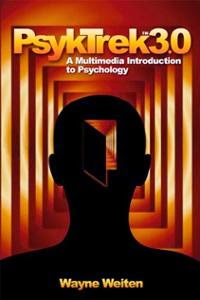


The AP EXAM is on Monday May 5th  You must have this assignment done by Friday April 4th. Out of the 56 mini quizzes on the CD you need to do at least 30 during that time. You get to pick which units you want to do and which parts of each unit you want to quiz yourself on. – I suggest using it to review before our Jan 22 Final Exam and then throughout the year.

When you use the CD you will register your name and e-mail address. You will also put in my name as Mr. Cantor and my e-mail address as ptdworkin-cantor@cps.edu. When you take the quizzes the results will be e-mailed to me. Please also record each quiz in the chart below. You must retake a quiz until you have at least 90% in order for it to count. This is an “all or nothing” assignment. If you do at least 30 successful quizzes this will count as a perfect score on an exam worth 50 points. If you do fewer than 30 successful quizzes it will count as a zero.

If you don’t have internet or a CD drive at home you can use the library or a friends house, but you are responsible to do this work outside of class. If you have a computer, but no internet access, you must record evidence of completing each quiz. You can take a screen shot of your results, or print the results page if you have a printer – you can then bring in a USB drive with the screenshots or turn in the print-outs.

Monday, December 16, 2013

Memory - Unit 7

Unit 7 Memory

Good overview of basic memory concepts.

Some fun memory games you can do online

NOVA: How Memory Works


This is not specifically about memory, but about implicit associations we make about people.
https://implicit.harvard.edu/implicit/demo/ You can take some of the Implicit Association Tests to see what some of your implicit associations about people and groups are. I’m putting it with this unit as an example of implicit vs. explicit thought processes.

Story from National Public Radio (NPR) about H.M., the man who had the bilateral removal of his hippocampus (What is the plural of hippocampus?) and ended up with the nearly complete inability to form new memories. Find out why he had his hippocampus removed and learn about this amazing case study of anterograde amnesia. 
 http://www.npr.org/templates/story/story.php?storyId=7584970

And an article from Psychology Today about H.M.

This video clip was made based on 2000 slices that were made of H.M.'s brain after he died in 2008. 


The movie Memento was the first feature film by star director Christopher Nolan who went on to direct The Dark Night and Inception. It is a fictional film about a character who, like H.M.,  loses the ability to create any new memories, but still tries to solve a horrible crime.

It is rated R due to some very violent content and adult language. If that sort of film is acceptable to you and your parents, you can stream it on Netflix or rent it. It's definitely not appropriate for younger siblings. 

Thursday, November 21, 2013

Learning - Unit 6


Pavlov won the Nobel Prize for his work... This website has simulations and lots of great info on him. 


Classical Conditioning on the show, "The Office" 

What is the UCS, the UCR, the NS, the CS and the CR? 


Classical Conditioning of of emotions by John Watson ... the birth of Behaviorism...poor Little Albert


Operant Conditioning - B.F. Skinner the ultimate Behaviorist


Observational Learning / Social Learning - Can you learn just by watching? Alfred Bandura

Children See - Children Do... PSA about Observational Learning


Insight Learning... a sudden inspiration - no trial and error, no reinforcement.

Tuesday, November 5, 2013

Perception - Unit 5

See how top-down processing affects perception... Can you count how many passes the white-shirted players make in this basketball video? (It's on YouTube, so it may not work in school. You can get to it at home on this link http://youtu.be/IGQmdoK_ZfY if the embedded video doesn't work)


Which way is this dancer spinning?


Clockwise or counter clockwise?
This site shows you how the illusion works http://ofb.net/~whuang/imgs/spin/


Which is the front and which is the back of the Necker Cube? It gets really interesting when you add a dog and a scuba diver... (click here)
http://dogfeathers.com/java/necker.html

Subliminal messages? How effective are they?
Democrats accused Republicans of putting a subliminal message into this Bush campaign commercial? Do you think it was intentional? Do you think it would have an effect? Click here if the embedded video isn't working http://youtu.be/2NPKxhfFQMs


These "TED Talks" can give us great insights into attention and color perception.

Cognitive Scientist Beau Lotto studies color perception in humans and bees.
Here is the link if the embedded video isn't working for you. http://www.ted.com/talks/beau_lotto_optical_illusions_show_how_we_see.html


Apollo Robbins is a skilled pick-pocket who shows us a thing or two about attention.
Link: http://www.ted.com/talks/apollo_robbins_the_art_of_misdirection.html 


Monday, October 21, 2013

Sensation - How the Ear works

Nobel Prize Website - Games, animations, the story of how the cochlea was unraveled...

The organization that gives out the Nobel Prize has a great website about the ear and how it works.

If you're having trouble understanding the accessory structures and the cochlea this site is for you.


Animations and interactives that explain the ear.

The Sumanas inc. video goes into great detail about the inner ear.
http://www.sumanasinc.com/webcontent/animations/content/soundtransduction.html

Another video on YouTube is great 3D animation that takes you into the ear as if you are a sound wave... it demonstrates the movements in the middle and inner ear with classical music... fantastic piece. The link is at http://youtu.be/PeTriGTENoc - since it's YouTube it may not work at school... 


Hearing Test: You need over-the-ear headphones and a decent computer to use this (not medically accurate) hearing test, but it's interesting to check out even if you don't have the right set-up.   http://youtu.be/h5l4Rt4Ol7M  It is a YouTube video, so it may not work at school. 
Mr. Cantor who was born in 1964 can hear sounds below roughly 14,000 Hz. How about you? 

Wednesday, October 16, 2013

Animations about vision - the retina and visual pathways

Fantastic animations about the eye, visual processing in the retina and the pathways that visual information travels in the brain.


Pay close attention to the "center-surround" aspects of retinal processing it this first video.

This animation shows how the photoreceptors, bipolar and ganglion cells of the retina are organized in "center-surround" arrangements that allow "bottom up" processing of visual information to begin in the retina. 


If a picture is worth a thousand words, an animation is worth way more. This animation really shows the visual pathway very well. Pay attention to how visual information is split in the Optic Chiasm and how it routs through the LGN of the thalamus as well as other areas specifically related to eye movement and the "biological clock" which controls circadian rhythms.

This excellent animation really explains how the visual information from the left and right visual fields makes its way to the right and left occipital lobes via the LGN of the thalamus. 

Check out this amazingly comprehensive video that covers the visual system in about 10 minutes. It's on YouTube, so it may be hard to watch at school. Link: http://youtu.be/AuLR0kzfwBU


The Zimbardo "Discovering Psychology" video on Sensation and Perception can be found at this link. 
http://www.learner.org/resources/series138.html?pop=yes&pid=1504


Wednesday, October 2, 2013

Discovering Psychology Videos - Biological Bases of Behavior

While these videos are slightly dated, they are still a great overview of the biological basis of behavior.

These are the third and fourth videos in the Discovering Psychology series. Short descriptions and links to the videos can be found below. They are from the series website.

Would you let this man handle your brain? 


3. The Behaving Brain  
This program discusses the structure and composition of the brain: how neurons function, how information is collected and transmitted, and how chemical reactions determine every thought, feeling, and action. With Dr. John Gabrieli of Stanford University and Dr. Mieke Verfaellie of Veterans Medical Hospital, Boston, Massachusetts. Updated. View it here. 

4. The Responsive Brain 
How the brain controls behavior and, conversely, how behavior and environment influence the brain's structure and functioning are the focus of this program. With Dr. Michael Meaney of McGill University and Dr. Russell Fernald of Stanford University. Updated. View it here.