Monday, January 16, 2012

Memory


Unit 7 Memory

Good overview of basic memory concepts.

Some fun memory games you can do online

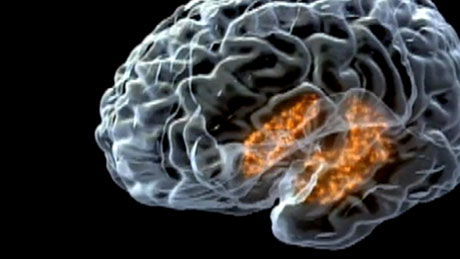
NOVA: How Memory Works

This is not specifically about memory, but about implicit associations we make about people.
https://implicit.harvard.edu/implicit/demo/ You can take some of the Implicit Association Tests to see what some of your implicit associations about people and groups are. I’m putting it with this unit as an example of implicit vs. explicit thought processes.

Story from National Public Radio (NPR) about H.M., the man who had the bilateral removal of his hippocampus (What is the plural of hippocampus?) and ended up with the nearly complete inability to form new memories. Find out why he had his hippocampus removed and learn about this amazing case study of anterograde amnesia. 


The movie Memento was the first film by star director Christopher Nolan who went on to direct The Dark Night and Inception. It is a fictional film about a character who, like H.M.,  loses the ability to create any new memories, but still tries to solve a horrible crime.

You can stream it on Netflix or rent it. It is rated R due to some violent content and adult language.

Sunday, December 11, 2011

Learning Links


(Note, the links to videos are to YouTube, so you can't watch them at school unless you are an awesome hacker and know a proxy work-around, also I have not tested some of these links this year, so please let me know if any are not working.)

Classical Conditioning:

Does the name "Pavlov" ring a bell?

Try your hand at conditioning Pavlov's Dog in this animation on the Nobel Prize site.

Here is the John Watson Little Albert video clip we saw in class. It has Spanish subtitles which is nice.

This article on the APA website describes how some college students figured out who "Little Albert" really was and what happened after the famous (infamous) conditioning experiment.

http://www.apa.org/monitor/2010/01/little-albert.aspx


Unfortunately we don't know if is fear of furry things lasted beyond Watson's research.


Operant Conditioning:
BF Skinner and his beloved pigeons

Here is the Skinner video clip we will see in class.

B.F. Skinner shaping a pigeon to turn around.
http://www.youtube.com/watch?v=TtfQlkGwE2U

And pigeons playing ping-pong? 


Observational Learning:
Bandura's Bobo Doll experiment... ouch

Here is a video of Bandura's Bobo doll experiment.

This Australian commercialshows how observational learning can affect kids.

Monday, November 14, 2011

Sensation and Perception Video


The link below will take you to the Sensation and Perception video we watched in class.

http://www.learner.org/discoveringpsychology/07/e07expand.html

Look for the "VoD" button to play the video once you click on the site. 

Friday, October 28, 2011

Animations about vision - the retina and visual pathways

Fantastic animations about the eye, visual processing in the retina and the pathways that visual information travels in the brain.

Pay close attention to the "center-surround" aspects of retinal processing it this first video.

This animation shows how the photoreceptors, bipolar and ganglion cells of the retina are organized in "center-surround" arrangements that allow "bottom up" processing of visual information to begin in the retina. 
http://www.sumanasinc.com/webcontent/animations/content/receptivefields.html


If a picture is worth a thousand words, an animation is worth way more. This animation really shows the visual pathway very well. Pay attention to how visual information is split in the Optic Chiasm and how it routs through the LGN of the thalamus as well as other areas specifically related to eye movement and the "biological clock" which controls circadian rhythms.

This excellent animation really explains how the visual information from the left and right visual fields makes its way to the right and left occipital lobes via the LGN of the thalamus. 
http://www.sumanasinc.com/webcontent/animations/content/visualpathways.html

Wednesday, October 26, 2011

Sensation - How the ear works.


Sensation... The Ear Pages on NobelPrize.org and a nice animation

The organization that gives out the Nobel Prize has a great website about the ear and how it works.

If you're having trouble understanding the accessory structures and the cochlea this site is for you.


Here is a link to another animation about how the ear works

http://www.sumanasinc.com/webcontent/animations/content/soundtransduction.html

Thursday, October 13, 2011

Great Animations for the Biological Basis of Psychology

This animation company produces some animations with very advanced content concerning the neurobiology you are learning in Unit 3 - Biological Basis of Behavior and will be learning in Unit 4 - Sensation. While some of the videos go into more detail than is typical in an AP psych class, I think they're worth watching to deepen your understanding and push yourself to a more advanced college level.

For Unit 3, I suggest "The Action Potential", "Synaptic Transmission", "Reflex Arcs" and "Positron Emission Tomography"

Saturday, October 1, 2011

OOPS! Revision to Unit 3 Assignment!

"Thank You" to Daisy for letting me know about a cutting and pasting error I made on the Unit 3 Assignment Sheet. I accidentally mixed up some Unit 3 with some Unit 4 work. Please don't do any Unit 4 work until Unit 4.

The correct assignment is:

Bernstein Study Guide Chapter 3 – Starts on P. 57
1.     Review the chapter based on your reading instructions. 
2.     Key Term Flashcards: All 63 Key Terms
3.     Don’t freak out. I know it’s a lot of flashcards. It will be worth memorizing and understanding the key terms. You will need to review the flashcards before quizzes and exams in class and as you study for the AP exam.
4.     Write out the Fill In The Blank Key Terms Writing out the full sentences will help you to learn the material. After you try to answer all of them check your work. If you get one wrong, write the correct answer with a brief explanation of why it’s correct.
5.     Select one of the “Personal Learning Activities” on P. 72. Do the activity and write a paragraph about what was most interesting or surprising about your experience. 
6.     Do Multiple Choice Sample Quiz 1 (p.73) and then check your answers with the key from page 80. Mark your total correct and be sure to review all questions you didn’t get right.