Showing posts with label NOVA. Show all posts

Monday, February 23, 2015

Unit 11 Motivation and Emotion


What Motivated Mike?

Here is a great Nike spot with Michael Jordan talking about how failure has helped him to succeed. Thanks for reminding me of this one, Mr. Niebuhr.


If the above play button does not appear or work you can try the link below.

https://www.youtube.com/watch?feature=player_embedded&v=GuXZFQKKF7A

If the video won't play, here is the quote that Michael Jordan states during the commercial. Base your answer on this quote.

"I've missed more than 9000 shots in my career. I've lost almost 300 games. 26 times, I've been trusted to take the game winning shot and missed. I've failed over and over and over again in my life. And that is why I succeed."
-- Michael Jordan

What do you think motivated Michael Jordan become the greatest basketball player of his era and one of the greatest in the history of the game?


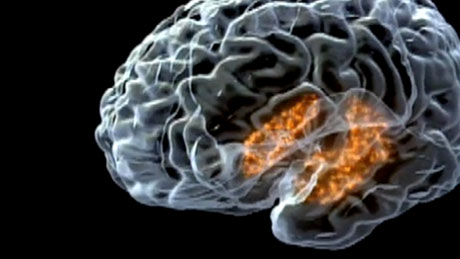
Anorexia, Bulimia and other Eating Disorders... The PBS NOVA video, Dying to Be Thin is a powerful examination of anorexia. You can watch the full video here.

Here is an interesting article about the distinction between eating disorders and disordered eating: https://www.psychologytoday.com/blog/contemporary-psychoanalysis-in-action/201402/disordered-eating-or-eating-disorder-what-s-the


There is a support group for people with eating disorders called ANAD- The National Association of Anorexia Nervosa and Associated Disorders. Their website has resources on eating disorders.


Tuesday, December 2, 2014

Unit 7 Memory

Unit 7 Memory


Reading assignment:  Bernstein Text  Pp. 234-274
Read and take Cornell Notes Due Monday 12/8
Flashcards and Concept Maps are Due Wednesday 12/10
Unit 7 Exam on Thursday Dec. 11
We will have a comprehensive MUST-PASS exam with FRQ– covering all material from the beginning of the year  on Tues. Dec. 16 and Wed. Dec. 17 It’s time to organize your notes and flashcards from the whole year and start to review. If you plan to score a 3, 4 or 5 on the AP Exam, now is the time to buy and use an AP Review.

Key ideas from Memory Unit:
Encoding, episodic vs. semantic and procedural memory, explicit vs. implicit memory, maintenance and rehearsal strategies to improve memory, various models of how memory works such as PDP and Info Processing, understand the difference between sensory, short term, and long term memory, compare recency and primacy effects, understand what affects memory retrieval, understand the limits of eye-witness testimony, Herman Ebbinghauss , compare retroactive and proactive interference,  compare retrograde and anterograde amnesia,
*****Use mnemonics and distributed practice to learn all this stuff and know why you are remembering and forgetting.


Good overview of basic memory concepts.

A whole site dedicated to human memory... very helpful. It has this very complete concept map. 
http://www.human-memory.net/types.html

Crash Course Psychology with our friend Hank!
How we make memories...


Remembering and Forgetting 


Some fun memory games you can do online

Elizabeth Loftus's Ted Talk - The Fiction of Memory... the rape conviction of an innocent man... 


NOVA: How Memory Works


Article - What Science Says about Ferguson: Hacked memory.  We may all be working from different sets of "facts" about the same event.
http://www.forbes.com/sites/fayeflam/2014/12/01/what-science-says-about-the-ferguson-case-memory-can-be-hacked/

This is not specifically about memory, but about implicit associations we make about people.
https://implicit.harvard.edu/implicit/demo/ You can take some of the Implicit Association Tests to see what some of your implicit associations about people and groups are. I’m putting it with this unit as an example of implicit vs. explicit thought processes.

Story from National Public Radio (NPR) about H.M., the man who had the bilateral removal of his hippocampus (What is the plural of hippocampus?) and ended up with the nearly complete inability to form new memories. Find out why he had his hippocampus removed and learn about this amazing case study of anterograde amnesia. 
 http://www.npr.org/templates/story/story.php?storyId=7584970

And an article from Psychology Today about H.M.

This video clip was made based on 2000 slices that were made of H.M.'s brain after he died in 2008. 


The movie Memento was the first feature film by star director Christopher Nolan who went on to direct The Dark Night and Inception. It is a fictional film about a character who, like H.M.,  loses the ability to create any new memories, but still tries to solve a horrible crime.

It is rated R due to some very violent content and adult language. If that sort of film is acceptable to you and your parents, you can stream it on Netflix or rent it. It's definitely not appropriate for younger siblings. 

Monday, January 16, 2012

Memory


Unit 7 Memory

Good overview of basic memory concepts.

Some fun memory games you can do online

NOVA: How Memory Works


This is not specifically about memory, but about implicit associations we make about people.
https://implicit.harvard.edu/implicit/demo/ You can take some of the Implicit Association Tests to see what some of your implicit associations about people and groups are. I’m putting it with this unit as an example of implicit vs. explicit thought processes.

Story from National Public Radio (NPR) about H.M., the man who had the bilateral removal of his hippocampus (What is the plural of hippocampus?) and ended up with the nearly complete inability to form new memories. Find out why he had his hippocampus removed and learn about this amazing case study of anterograde amnesia. 


The movie Memento was the first film by star director Christopher Nolan who went on to direct The Dark Night and Inception. It is a fictional film about a character who, like H.M.,  loses the ability to create any new memories, but still tries to solve a horrible crime.

You can stream it on Netflix or rent it. It is rated R due to some violent content and adult language.