Showing posts with label Memory. Show all posts

Tuesday, September 8, 2015

Unit 1 - Chapter 7: Memory - How we remember, why we forget.

Unit 1 Chapter 7 Memory

Key ideas from Memory Unit:
Encoding, episodic vs. semantic and procedural memory, explicit vs. implicit memory, maintenance and rehearsal strategies to improve memory, various models of how memory works such as PDP and Info Processing, understand the difference between sensory, short term, and long term memory, compare recency and primacy effects, understand what affects memory retrieval, understand the limits of eye-witness testimony, Herman Ebbinghauss , compare retroactive and proactive interference,  compare retrograde and anterograde amnesia,
*****Use mnemonics and distributed practice to learn all this stuff and know why you are remembering and forgetting.


Good overview of basic memory concepts.

A whole site dedicated to human memory... very helpful. It has this very complete concept map. 
http://www.human-memory.net/types.html

Crash Course Psychology with our friend Hank!
How we make memories...


Remembering and Forgetting 


Some fun memory games you can do online

Elizabeth Loftus's Ted Talk - The Fiction of Memory... the rape conviction of an innocent man... 


NOVA: How Memory Works

Article - What Science Says about Ferguson: Hacked memory.  We may all be working from different sets of "facts" about the same event.
http://www.forbes.com/sites/fayeflam/2014/12/01/what-science-says-about-the-ferguson-case-memory-can-be-hacked/

This is not specifically about memory, but about implicit associations we make about people.
https://implicit.harvard.edu/implicit/demo/ You can take some of the Implicit Association Tests to see what some of your implicit associations about people and groups are. I’m putting it with this unit as an example of implicit vs. explicit thought processes.

Story from National Public Radio (NPR) about H.M., the man who had the bilateral removal of his hippocampus (What is the plural of hippocampus?) and ended up with the nearly complete inability to form new memories. Find out why he had his hippocampus removed and learn about this amazing case study of anterograde amnesia. 
 http://www.npr.org/templates/story/story.php?storyId=7584970

And an article from Psychology Today about H.M.

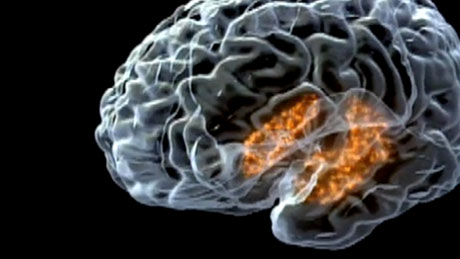
This video clip was made based on 2000 slices that were made of H.M.'s brain after he died in 2008. 


The movie Memento was the first feature film by star director Christopher Nolan who went on to direct The Dark Night and Inception. It is a fictional film about a character who, like H.M.,  loses the ability to create any new memories, but still tries to solve a horrible crime.

It is rated R due to some very violent content and adult language. If that sort of film is acceptable to you and your parents, you can stream it on Netflix or rent it. It's definitely not appropriate for younger siblings. 

Friday, September 4, 2015

Summer Assignment Parts 3 and 4 - Due on Tuesday 9/8

Part 3 Due the FIRST day of class Complete all the study-guide questions for “Phineas Gage” by John Fleischman in your AP Psych Notebook. 

Part 4. Due the First day of class:  Read AND take Cornell Notes and make Flash-Cards for chapter 7, MEMORY, in the Bernstein psychology textbook. You will keep these notes and flashcards all year and use them as you study for the AP Exam, so have a good notebook or binder that will last all year. The main thing to do when you take notes is ORGANIZE the information in such a way that it makes sense to you. Write questions and your own thoughts about the material as well as headings and subheadings in the left column of your notes. The more you can connect this material to information you already know or experiences you’ve had, the better you will learn and understand the material.

We’re reading Ch7 first because many students have said that it helped them learn to memorize new terms and concepts. This knowledge will help you all year and beyond. Review the Key Ideas listed below to be sure they’re in your notes, flashcards and brain.

Key ideas from Memory Unit / Chapter 7:
Encoding, episodic vs. semantic and procedural memory, explicit vs. implicit memory, maintenance and rehearsal strategies to improve memory, various models of how memory works such as PDP and Info Processing, understand the difference between sensory, short term, and long term memory, compare recency and primacy effects, understand what affects memory retrieval, understand the limits of eye-witness testimony, Herman Ebbinghauss , compare retroactive and proactive interference,  compare retrograde and anterograde amnesia,
*****Use mnemonics and distributed practice to learn all this stuff and know why you are remembering and forgetting.

It’s also a great idea to skim through the textbook to familiarize yourself with the topics we’ll be learning all year. Jot down questions you have on sticky-notes and put them in your book so you remember to ask them when we get to the unit.


On the first day of class be prepared to discuss the Phineas Gage book as well as Chapter 7 of the Bernstein text.

Tuesday, December 2, 2014

Unit 7 Memory

Unit 7 Memory


Reading assignment:  Bernstein Text  Pp. 234-274
Read and take Cornell Notes Due Monday 12/8
Flashcards and Concept Maps are Due Wednesday 12/10
Unit 7 Exam on Thursday Dec. 11
We will have a comprehensive MUST-PASS exam with FRQ– covering all material from the beginning of the year  on Tues. Dec. 16 and Wed. Dec. 17 It’s time to organize your notes and flashcards from the whole year and start to review. If you plan to score a 3, 4 or 5 on the AP Exam, now is the time to buy and use an AP Review.

Key ideas from Memory Unit:
Encoding, episodic vs. semantic and procedural memory, explicit vs. implicit memory, maintenance and rehearsal strategies to improve memory, various models of how memory works such as PDP and Info Processing, understand the difference between sensory, short term, and long term memory, compare recency and primacy effects, understand what affects memory retrieval, understand the limits of eye-witness testimony, Herman Ebbinghauss , compare retroactive and proactive interference,  compare retrograde and anterograde amnesia,
*****Use mnemonics and distributed practice to learn all this stuff and know why you are remembering and forgetting.


Good overview of basic memory concepts.

A whole site dedicated to human memory... very helpful. It has this very complete concept map. 
http://www.human-memory.net/types.html

Crash Course Psychology with our friend Hank!
How we make memories...


Remembering and Forgetting 


Some fun memory games you can do online

Elizabeth Loftus's Ted Talk - The Fiction of Memory... the rape conviction of an innocent man... 


NOVA: How Memory Works


Article - What Science Says about Ferguson: Hacked memory.  We may all be working from different sets of "facts" about the same event.
http://www.forbes.com/sites/fayeflam/2014/12/01/what-science-says-about-the-ferguson-case-memory-can-be-hacked/

This is not specifically about memory, but about implicit associations we make about people.
https://implicit.harvard.edu/implicit/demo/ You can take some of the Implicit Association Tests to see what some of your implicit associations about people and groups are. I’m putting it with this unit as an example of implicit vs. explicit thought processes.

Story from National Public Radio (NPR) about H.M., the man who had the bilateral removal of his hippocampus (What is the plural of hippocampus?) and ended up with the nearly complete inability to form new memories. Find out why he had his hippocampus removed and learn about this amazing case study of anterograde amnesia. 
 http://www.npr.org/templates/story/story.php?storyId=7584970

And an article from Psychology Today about H.M.

This video clip was made based on 2000 slices that were made of H.M.'s brain after he died in 2008. 


The movie Memento was the first feature film by star director Christopher Nolan who went on to direct The Dark Night and Inception. It is a fictional film about a character who, like H.M.,  loses the ability to create any new memories, but still tries to solve a horrible crime.

It is rated R due to some very violent content and adult language. If that sort of film is acceptable to you and your parents, you can stream it on Netflix or rent it. It's definitely not appropriate for younger siblings. 

Monday, December 16, 2013

Memory - Unit 7

Unit 7 Memory

Good overview of basic memory concepts.

Some fun memory games you can do online

NOVA: How Memory Works


This is not specifically about memory, but about implicit associations we make about people.
https://implicit.harvard.edu/implicit/demo/ You can take some of the Implicit Association Tests to see what some of your implicit associations about people and groups are. I’m putting it with this unit as an example of implicit vs. explicit thought processes.

Story from National Public Radio (NPR) about H.M., the man who had the bilateral removal of his hippocampus (What is the plural of hippocampus?) and ended up with the nearly complete inability to form new memories. Find out why he had his hippocampus removed and learn about this amazing case study of anterograde amnesia. 
 http://www.npr.org/templates/story/story.php?storyId=7584970

And an article from Psychology Today about H.M.

This video clip was made based on 2000 slices that were made of H.M.'s brain after he died in 2008. 


The movie Memento was the first feature film by star director Christopher Nolan who went on to direct The Dark Night and Inception. It is a fictional film about a character who, like H.M.,  loses the ability to create any new memories, but still tries to solve a horrible crime.

It is rated R due to some very violent content and adult language. If that sort of film is acceptable to you and your parents, you can stream it on Netflix or rent it. It's definitely not appropriate for younger siblings. 

Wednesday, October 2, 2013

Discovering Psychology Videos - Biological Bases of Behavior

While these videos are slightly dated, they are still a great overview of the biological basis of behavior.

These are the third and fourth videos in the Discovering Psychology series. Short descriptions and links to the videos can be found below. They are from the series website.

Would you let this man handle your brain? 


3. The Behaving Brain  
This program discusses the structure and composition of the brain: how neurons function, how information is collected and transmitted, and how chemical reactions determine every thought, feeling, and action. With Dr. John Gabrieli of Stanford University and Dr. Mieke Verfaellie of Veterans Medical Hospital, Boston, Massachusetts. Updated. View it here. 

4. The Responsive Brain 
How the brain controls behavior and, conversely, how behavior and environment influence the brain's structure and functioning are the focus of this program. With Dr. Michael Meaney of McGill University and Dr. Russell Fernald of Stanford University. Updated. View it here.